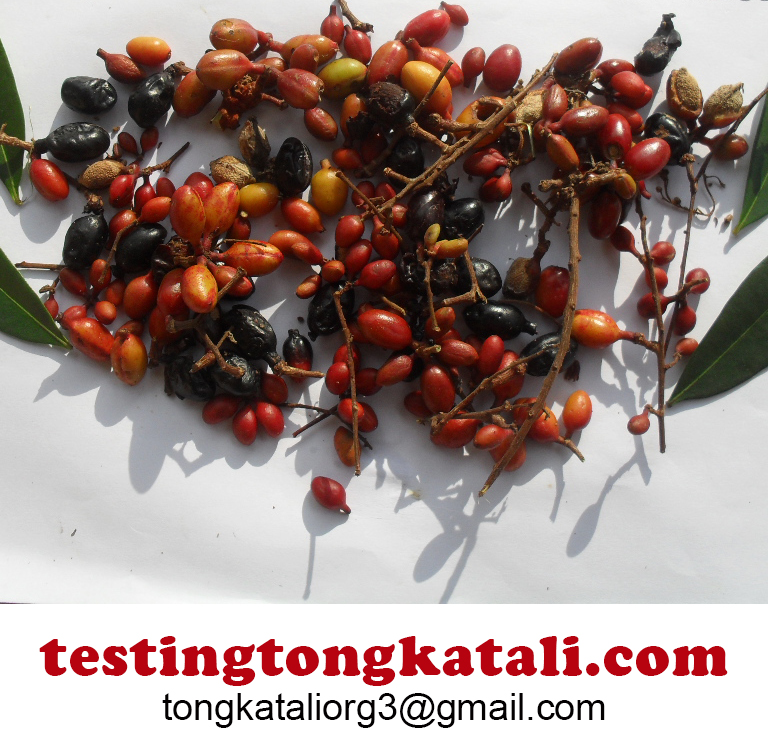
Eurycoma longifolia
Jingya Ruan, Zheng Li, Ying Zhang, Yue Chen, Mengyang Liu, Lifeng Han, Yi Zhang, and Tao Wang
Abstract
Four new phenolic components, eurylophenolosides A (1) and B (2), eurylolignanosides A (3) and B (4), along with twelve known compounds were isolated from the roots of Eurycoma longifolia Jack. The structure of these components was elucidated by using various spectral techniques and chemical reactions. Among the known isolates, syringaldehyde (12), 3-chloro-4-hydroxybenzoic acid (13), 3-chloro-4-hydroxyl benzoic acid-4-O-ß-d-glucopyranoside (14), and isotachioside (15) were isolated from the Eurycoma genus for the first time. Further, the NMR data of 14 was reported here firstly. Meanwhile, the nitric oxide (NO) inhibitory activities of all compounds were examined in lipopolysaccharide (LPS)-stimulated RAW264.7 cells at 40 µM. As results, piscidinol A (6), 24-epi-piscidinol A (7), bourjotinolone A (10), and scopoletin (16) were found to play important role in suppressing NO levels without cytotoxicity. Furthermore, the Western blot method was used to investigate the mechanism of compounds 6, 7, 10, and 16 by analysing the level of inflammation related proteins, such as inducible nitric oxide synthase (iNOS), interleukin-6 (IL-6), and nuclear factor kappa-light-chain-enhancer of activated B cells (NF-?B) in LPS-stimulated RAW264.7 cells. Consequently, compounds 6, 7, 10, and 16 were found to significantly inhibit LPS-induced protein expression of IL-6, NF-?B and iNOS in NF-?B signaling pathway. Moreover, it was found that the protein expression inhibitory effects of 6, 7, and 16 exhibited in a dose-dependent manner. The mechanism may be related to the inhibition of the iNOS expressions through suppressing the IL-6-induced NF-?B pathway.
References:
Bhat, Rajeev; Karim, A.A. (2010), Tongkat Ali (Eurycoma longifolia Jack): A review on its ethnobotany and pharmacological importance, Fitoterapia,
Volume 81, Issue 7, Pages 669-679
Chua, L.S.; Lau, C.H.; Chew, C.Y.; Dawood, D.A.S. (2019), Solvent Fractionation and Acetone Precipitation for Crude Saponins from Eurycoma longifolia Extract Molecules, Volume 24, Pages 1416
Henkel, Ralf R.; Wang, Ruxiang; Bassett, Susan H.; Chen, Tao; Liu, Na; Zhu,Ying ; Tambi, Mohd Ismail (2013), Tongkat Ali as a Potential Herbal Supplement for Physically Active Male and Female Seniors—A Pilot Study, Phytotherapy Research,Volume 28, Issue 4, Pages 544-550
Lahrita, Lucy; Hirosawa, Ryota; Kato, Eisuke; Kawabata, Jun (2017), Isolation and lipolytic activity of eurycomanone and its epoxy derivative from Eurycoma longifolia, Bioorganic & Medicinal Chemistry,
Volume 25, Issue 17, Pages 4829-4834
Nhan NH, Loc NH. (2017), Production of eurycomanone from cell suspension culture of Eurycoma longifolia , Pharmaceutical Biology Vol 55(1) Pages 2234-2239
Rehman, Shaheed Ur; Choe, Kevin; Yoo, Hye Hyun (2016) Review on a Traditional Herbal Medicine, Eurycoma longifolia Jack (Tongkat Ali): Its Traditional Uses, Chemistry, Evidence-Based Pharmacology and Toxicology, Molecules, Vol 21(3), Pages 331, https://doi.org/10.3390/molecules21030331
Tong KL, Chan KL, AbuBakar S, Low BS, Ma HQ, Wong PF. (2015), The in vitro and in vivo anti-cancer activities of a standardized quassinoids composition from Eurycoma longifolia on LNCaP human prostate cancer cells, PLoS One. Vol 10(3)
Available on Amazon:
Tongkat Ali, Fermented Dark Traditionally Processed Indonesian 1:200 Stem-Root-Leaves Extract
110 Vegetarian Capsules @ 400mg
Tongkat Ali, Traditionally Processed Dark Grade A Indonesian 1:200 Extract
175 Capsules @ 280 mg
Tongkat Ali Indonesian 1:200 Dark Fermented Root Extract
110 x 280 mg
Tongkat Ali, Dark Fermented Indonesian Grade Root - Stem - Leaves Extract
110 Vegetarian Caps @ 420 mg
Longjack, Traditionally Processed Dark Indonesian Grade A 1:200 Tongkat Ali Extract
110 Capsules @ 280mg
https://www.amazon.com/dp/B09THHLTWQ
Product details
https://www.amazon.com/dp/B08RW9G9YV
Product details
https://www.amazon.com/dp/B09S8B23P6
Product details
https://www.amazon.com/dp/B091NJMK91
Product details
https://www.amazon.com/dp/B0BGG7PM5F
Product details